
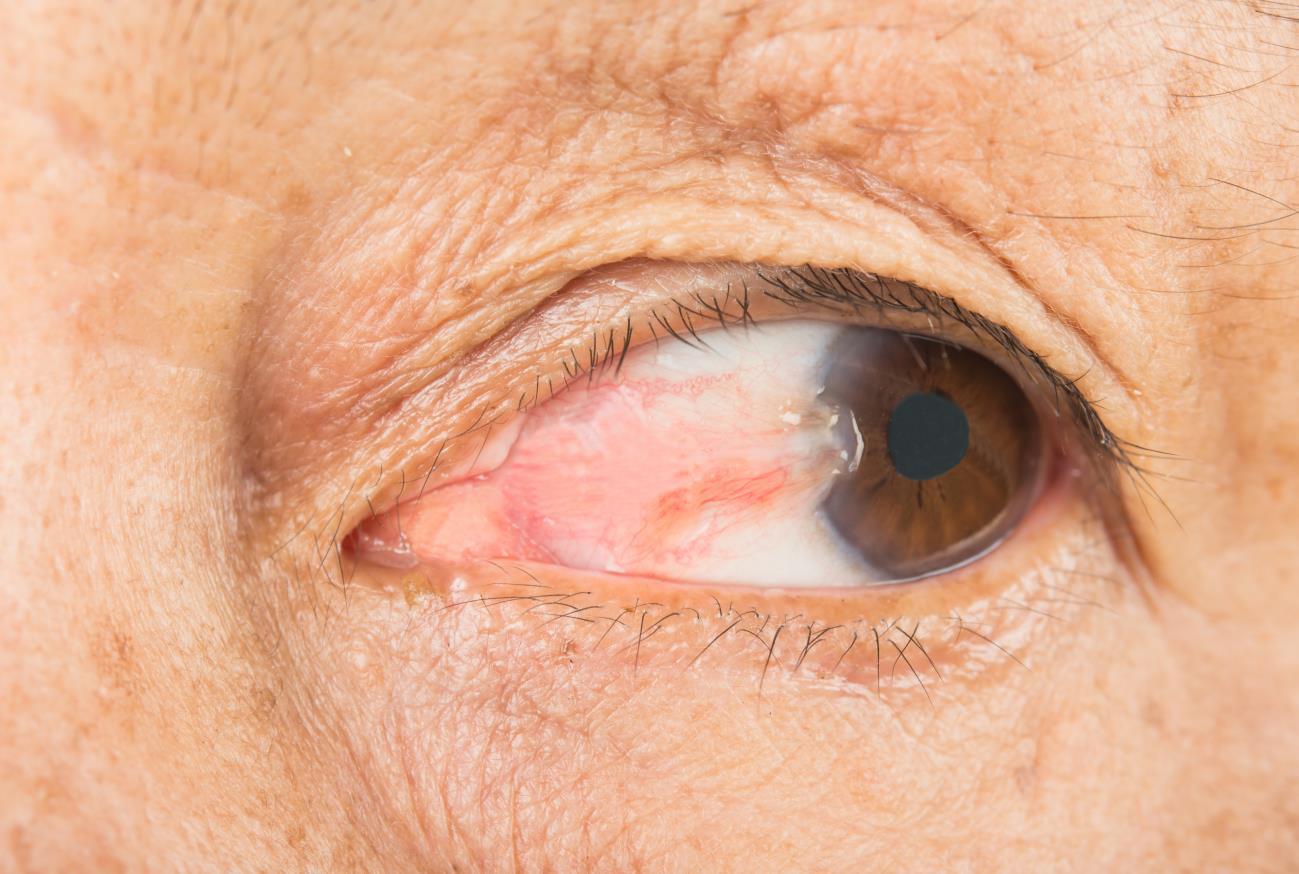
They are benign, often do not require treatment, but can develop into pterygia over time. Major risk factors for the development of pingueculae are wind, UV, and dust exposure. Most people with pingueculae are unaware of their presence until they are examined by their optometric physician, although some may notice eye irritation caused by the extra tissue. Artificial tears are often recommended to soothe irritation.
Pingueculae may become enflamed, at which time topical steroids may be prescribed. Both pterygia and pingueculae most commonly develop in the nasal corner of the eye but may also occur in the corner nearest the temple. Sunglass wear can help prevent exposure to UV light and wind, inhibiting growth and development of a pterygium or pinguecula. (Pictured is a pterygium.)